
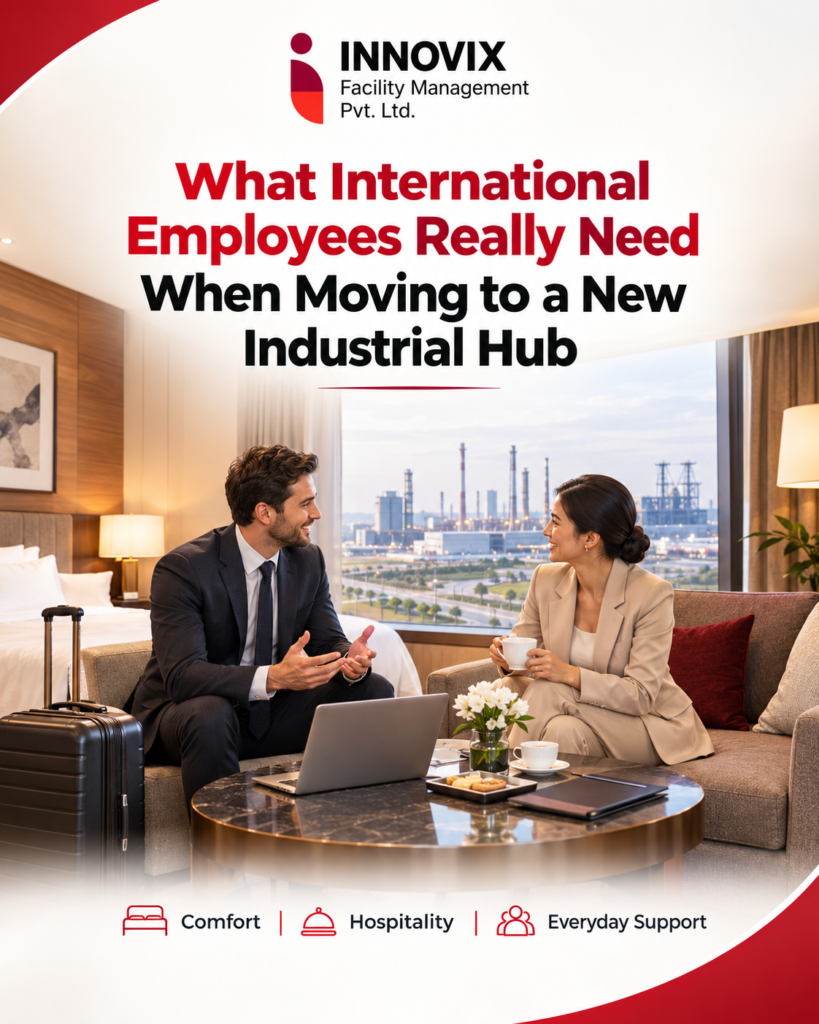
Moving employees to a new industrial hub is not simply about arranging a workplace. For international professionals, the transition also involves finding a comfortable place to live, adjusting to a new environment, managing everyday routines, and having access to reliable support. Innovix Facility Management Pvt. Ltd. helps businesses address these requirements through integrated accommodation, hospitality, catering, housekeeping and facility support designed for corporate and international workforces.
This becomes especially important when employees are relocating for long-term industrial, manufacturing, technology, or infrastructure projects. A well-planned employee experience can make the transition smoother while helping businesses provide a comfortable environment for their international teams.
Dholera is developing as an important industrial destination, bringing new business opportunities and project teams to the region. As more international professionals work in the area, businesses need to think carefully about accommodation, food, housekeeping, security, connectivity, and daily assistance.
Why International Employee Relocation Requires More Than a Workplace
An employee may have an excellent workplace, but that alone does not guarantee a successful relocation.
International employees may need support with several aspects of daily life, including:
- Comfortable and well-maintained accommodation
- Reliable internet and essential utilities
- Regular housekeeping
- Suitable food options
- Transportation and local assistance
- Safety and security
- Access to basic everyday services
- A living environment that respects their cultural and lifestyle preferences
For companies, arranging these requirements individually can become difficult as the number of employees increases. This is why accommodation and facility support should be considered as part of the overall workforce planning process.
Understanding the Everyday Needs of International Employees
Employees relocating from another country often have different expectations from local employees. Their requirements can be influenced by their previous living environment, work schedule, food preferences, family situation, and length of assignment.
For example, a professional coming to Dholera for several years may need a different accommodation arrangement than someone visiting for a few days. Similarly, a large project team may require coordinated food, housekeeping, transportation, and accommodation services.
Understanding these differences before employees arrive can help companies create a smoother relocation experience.
Challenges Employees May Face When Moving to a New Industrial Hub
Moving to a developing business destination can involve several practical challenges.
Employees may need time to become familiar with the location, local services, transportation options, food choices, and daily routines. If accommodation or support services are not properly planned, these small challenges can affect comfort and productivity.
For this reason, companies should consider employee support infrastructure at the same time as project and workforce planning.
Choosing the Right Expat Accommodation in Dholera
Accommodation is one of the first priorities when relocating international employees. For long-term assignments, accommodation becomes an important part of the employee experience.
What Makes Accommodation Comfortable for International Employees?
A suitable accommodation arrangement should consider practical requirements such as:
- Clean and comfortable rooms
- Quality furniture and bedding
- Reliable electricity and water supply
- Internet connectivity
- Housekeeping support
- Laundry facilities
- Security
- Convenient access to workplaces
- Common areas where appropriate
- Responsive maintenance and support
The exact requirements will depend on the employee profile and project duration, but the objective remains the same: creating a dependable living environment.
Short-Term vs. Long-Stay Accommodation
Not every international employee will have the same length of stay.
Short-term visitors may need flexible accommodation with hotel-style services and convenient access to business locations. Employees working on longer assignments may require a more residential environment with additional daily-life facilities.
For companies managing international teams, choosing accommodation based on the duration and nature of the assignment can help avoid unnecessary costs and improve employee comfort.
Location, Privacy and Essential Amenities
Location is another important consideration.
Employees should ideally have reasonable access to their workplace while still having a comfortable environment away from work. Privacy also becomes particularly important for professionals staying for several months or longer.
Essential amenities such as internet connectivity, housekeeping, laundry, food services and security can make a significant difference to the overall living experience.
Creating a Comfortable Living Environment for Overseas Employees
Accommodation is only one part of the relocation experience. The quality of everyday support can determine whether employees feel comfortable over the long term.
A well-managed residential facility should have clear processes for cleanliness, maintenance, guest management, security and basic assistance.
Cleanliness and Housekeeping
Consistent housekeeping helps maintain a hygienic and comfortable living environment.
For corporate accommodation, housekeeping may include routine room cleaning, common-area cleaning, linen management and other property-support activities. A structured cleaning schedule can also help maintain consistent standards when occupancy increases.
Reliable Utilities and Internet Connectivity
International professionals often depend heavily on reliable connectivity for both work and personal communication.
Stable internet, electricity, water supply and other essential utilities should therefore be considered when selecting or managing accommodation for overseas employees.
Security and Day-to-Day Assistance
Employees staying away from their home country need to feel secure in their living environment.
Security arrangements, responsive support staff, maintenance assistance and clear processes for handling everyday issues can give employees greater confidence during their assignment.
Food and Dining Considerations for International Employees
Food is another important part of the relocation experience.
Employees who move to another country may initially find local food choices unfamiliar. Providing suitable dining options can help them maintain familiar routines while gradually adapting to their new surroundings.
For large project teams, food planning also needs to consider work schedules, shift patterns, workforce numbers and individual preferences.
Why Familiar Food Choices Matter
Familiar food can provide a sense of comfort, particularly during the initial stages of relocation.
Companies supporting international employees can consider a combination of local and international food choices depending on workforce requirements. This approach can make corporate dining more inclusive without ignoring local culinary preferences.
Japanese and Taiwanese Food Preferences
International teams from Japan and Taiwan may have specific expectations regarding ingredients, preparation methods, flavours and meal formats.
For businesses with Japanese or Taiwanese professionals, understanding these preferences can improve the overall dining experience.
The goal is not simply to provide more food choices but to create dining arrangements that are appropriate for the workforce being served.
Managing Meals for Large International Workforces
Large industrial projects can involve employees working across multiple shifts.
Food operations therefore need proper planning for meal timings, quantities, menus, service areas and hygiene. A coordinated food-service operation can help businesses maintain consistency even when workforce numbers and schedules change.
Supporting Employees Beyond Accommodation
A successful relocation programme should consider the employee’s complete daily experience rather than accommodation alone.
Housekeeping, transportation, food, maintenance and local assistance can all contribute to a smoother stay.
Housekeeping and Property Support
Professional property support helps ensure that accommodation remains clean, functional and ready for occupancy.
This is particularly important for businesses managing multiple rooms or properties because maintenance and housekeeping requirements can increase significantly as the workforce grows.
Transportation and Local Assistance
Employees unfamiliar with a new location may require assistance with transportation and basic local coordination.
Companies can consider transportation planning around work schedules, accommodation locations and employee requirements to make daily commuting more convenient.
Guest and Visitor Management
Corporate accommodation may also receive visitors, project members or business guests.
Clear visitor procedures, reception support and security coordination can help maintain a professional and secure environment.
Cultural Awareness Can Improve the Employee Experience
International hospitality is not only about physical facilities. It is also about understanding how different employees live, communicate and use services.
Understanding Different Lifestyle Expectations
Employees from different countries may have different expectations regarding food, room arrangements, privacy, communication and service.
Being aware of these differences allows businesses to provide a more considerate experience.
Training Hospitality Staff for International Guests
Staff members who interact with international employees should understand basic hospitality etiquette and the importance of respectful communication.
Small details in communication and service can make employees feel more comfortable in an unfamiliar environment.
Creating a Familiar and Respectful Environment
The objective should not be to recreate an employee’s home country completely.
Instead, companies can provide familiar elements where practical while creating a respectful environment that allows employees to adapt comfortably to their new surroundings.
Planning Accommodation for Growing Project Teams
Workforce requirements can change as an industrial project progresses.
A company may begin with a small group of technical professionals and later expand its workforce significantly. Accommodation and support services should therefore be flexible enough to handle changing occupancy requirements.
What Changes When the Workforce Expands?
As employee numbers increase, businesses may need additional:
- Rooms and residential spaces
- Housekeeping staff
- Food-service capacity
- Maintenance support
- Transportation arrangements
- Security coverage
- Administrative coordination
Planning these requirements in advance can reduce operational pressure during workforce expansion.
Managing Rooms, Meals and Support Services Together
Managing accommodation, food and housekeeping separately can create additional coordination work.
An integrated approach allows businesses to align occupancy, meal planning, cleaning schedules and workforce requirements more effectively.
Maintaining Consistent Service Standards
Scaling operations should not mean reducing service quality.
Clear operating procedures, trained teams, regular monitoring and proper coordination can help maintain consistent standards as the number of employees increases.
Why an Integrated Facility Partner Can Make Relocation Easier
For businesses managing large international teams, coordinating several different service providers can become time-consuming.
An integrated facility management partner can help coordinate multiple support functions under a structured operational framework.
Coordinating Accommodation, Food and Housekeeping
When accommodation, food and housekeeping are planned together, businesses can create better coordination between different services.
For example, room occupancy information can support housekeeping schedules, while workforce numbers can help with meal planning and accommodation requirements.
Reducing the Burden on Internal Management Teams
Instead of coordinating every operational requirement internally, companies can work with a specialist partner for day-to-day facility support.
This can allow internal teams to focus more closely on their core business and project responsibilities.
Creating a Consistent Employee Experience
The objective of integrated support is simple: employees should experience reliable service across the different parts of their daily routine.
From the moment an employee arrives at their accommodation to their meals, housekeeping and everyday support, coordinated operations can create a more seamless experience.
A Practical Checklist for Relocating International Employees to Dholera
Before relocating international employees, companies should evaluate:
Requirement | What to Consider |
Accommodation | Comfort, privacy, location and room facilities |
Housekeeping | Cleaning schedules, linen and common-area maintenance |
Food | Dietary preferences, meal timings and workforce size |
Connectivity | Internet and communication facilities |
Utilities | Reliable electricity, water and essential services |
Security | Residential security and visitor procedures |
Transportation | Workplace connectivity and commuting arrangements |
Local Support | Assistance with everyday requirements |
Cultural Needs | Food, lifestyle and communication preferences |
Scalability | Ability to support workforce expansion |
This checklist can help businesses identify gaps before employees arrive and create a more organized relocation plan.
Final Thoughts
Relocating international employees to a growing industrial destination requires careful planning beyond the workplace. Comfortable accommodation, reliable housekeeping, suitable food, connectivity, security and everyday assistance can all contribute to a smoother transition.
For companies bringing overseas professionals to Dholera, choosing the right expat accommodation in Dholera is an important part of building a comfortable and productive employee experience.
With the right combination of accommodation, hospitality and facility support, businesses can create an environment where international employees can settle in more comfortably and focus on their professional responsibilities.
Frequently Asked Questions
1. What should companies consider when relocating international employees to Dholera?
Companies should consider accommodation, food, housekeeping, transportation, internet connectivity, security, utilities and everyday support. The requirements can vary depending on the employee’s nationality, assignment duration and project location.
2. What should good expat accommodation in Dholera include?
Good accommodation should provide clean and comfortable rooms, reliable utilities, internet connectivity, housekeeping, security and convenient access to the workplace. For long-term stays, additional lifestyle and daily-support facilities can also be important.
3. Is long-stay accommodation suitable for international project teams?
Yes. Long-stay accommodation can be suitable for employees working on extended industrial or corporate assignments. It can provide a more comfortable and consistent living arrangement compared with frequently changing short-term accommodation.
4. How can companies support Japanese and Taiwanese employees in Dholera?
Companies can consider suitable accommodation, familiar food options, culturally aware hospitality services, housekeeping and reliable day-to-day assistance. Understanding the specific requirements of the workforce can make relocation more comfortable.
5. Why is food an important part of international employee support?
Familiar and suitable food options can help employees adjust to a new environment. For large international teams, companies can plan menus, meal timings and food services around employee preferences and work schedules.