
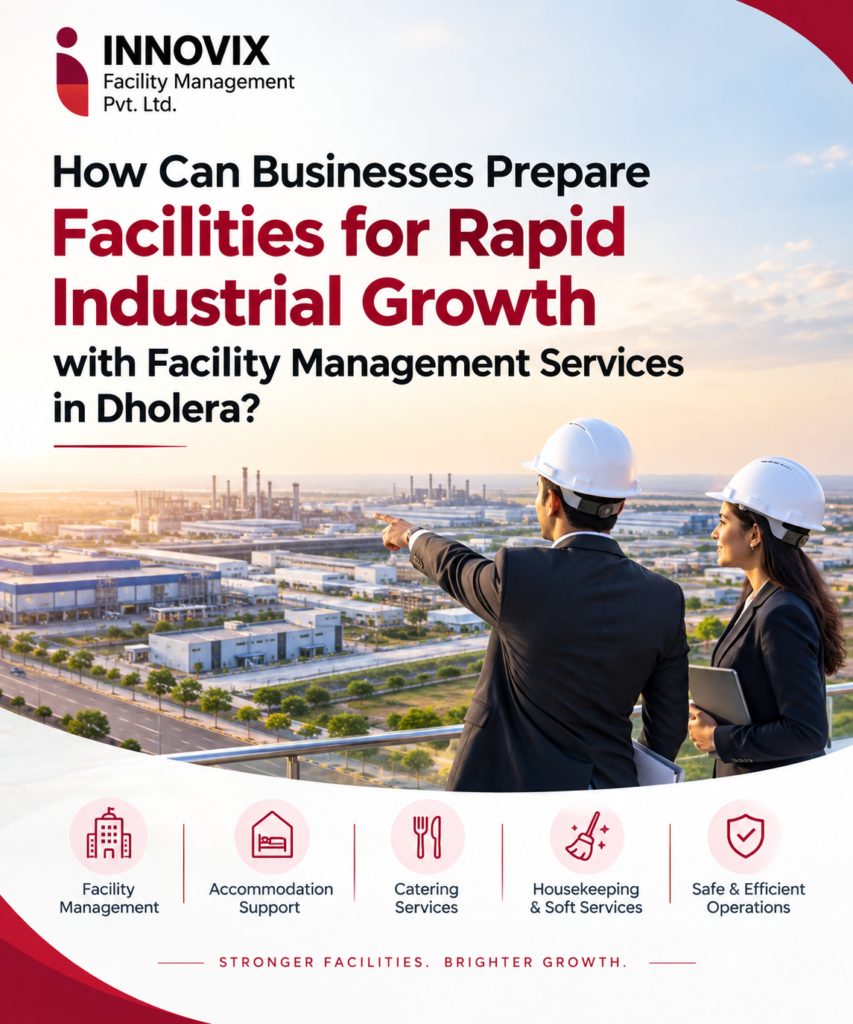
Dholera is emerging as an important destination for industrial, manufacturing, infrastructure and technology-driven development. As new projects expand and existing businesses scale their operations, facility requirements also become more complex.
A growing industrial operation needs more than a functional workplace. Businesses must think about housekeeping, maintenance, employee support, food services, accommodation, utilities, hygiene and day-to-day facility operations.
This is where Facility Management Services in Dholera can play an important role. A well-planned facility management approach helps businesses prepare for changing requirements while maintaining operational efficiency and consistent service standards.
Why Rapid Industrial Growth Creates New Facility Challenges
Industrial growth often brings a rapid increase in employees, visitors, contractors, equipment and daily activities. Facilities that work well for a small workforce may not be suitable when operations expand significantly.
Businesses may face challenges such as:
- Increased housekeeping requirements
- Higher demand for employee dining facilities
- More accommodation requirements for project teams
- Greater maintenance and utility needs
- Increased pressure on internal administrative teams
- More complex workforce-support requirements
- The need for consistent hygiene and safety standards
Without proper planning, these requirements can become difficult to coordinate. Facility management helps businesses create structured processes before operational pressure increases.
How Businesses Can Prepare Their Facilities for Growth
Preparing for industrial growth starts with understanding both current and future requirements. Instead of planning only for today’s workforce, businesses should consider how their facility needs may change as the project develops.
Assess Current Facility Requirements
The first step is to evaluate existing infrastructure and support services.
Businesses can review:
- Workplace capacity
- Cleaning and housekeeping requirements
- Maintenance schedules
- Food and dining arrangements
- Employee accommodation
- Utility management
- Security and support services
- Staff and vendor coordination
This assessment helps identify areas where additional capacity or better management processes may be required.
Plan for Future Workforce Expansion
A growing workforce can affect almost every part of facility operations.
More employees may mean:
- More rooms or accommodation capacity
- Larger food-service operations
- Additional housekeeping staff
- Increased cleaning frequency
- Higher utility consumption
- More maintenance requirements
- Greater transportation and administrative coordination
Planning these requirements in advance can make expansion easier to manage.
Build Scalable Facility Operations
Facility systems should be capable of adapting as business requirements change.
For example, a catering operation may need to increase meal capacity as employee numbers rise. Similarly, housekeeping and maintenance teams may need additional resources when a facility becomes larger.
Scalable processes allow businesses to increase support without completely restructuring their facility operations.
The Role of Facility Management Services in Dholera
Professional facility management brings different operational requirements into a coordinated system.
For industrial and corporate businesses, this can include housekeeping, soft services, food operations, accommodation management and other facility-support functions.
Managing Day-to-Day Facility Operations
Daily facility activities can take significant time when handled entirely by internal teams.
Professional facility management can help coordinate routine operational requirements through defined processes, trained personnel and service monitoring.
This allows internal business teams to focus more closely on their primary responsibilities.
Maintaining Workplace Cleanliness and Hygiene
Clean and well-maintained facilities contribute to a more organized working environment.
Regular housekeeping can cover areas such as:
- Workspaces
- Common areas
- Restrooms
- Dining areas
- Residential facilities
- High-traffic zones
Cleaning schedules and standard operating procedures can also help maintain consistency across larger facilities.
Supporting Maintenance and Utility Management
As facilities expand, maintenance requirements can become more demanding.
Preventive maintenance, regular inspections and timely issue reporting can help businesses identify problems before they create larger operational disruptions.
A structured maintenance approach can cover building infrastructure, utilities, equipment and other facility requirements according to the site’s needs.
Preparing Employee Facilities for a Growing Workforce
Employee experience is another important consideration when preparing for industrial growth.
Businesses may need to provide reliable support beyond the workplace, particularly when employees are working on long-term projects or relocating from another location.
Housekeeping and Workplace Support
Consistent housekeeping helps maintain clean and organized working and residential environments.
For large facilities, businesses can establish cleaning schedules based on occupancy, facility usage and specific operational requirements.
Employee Accommodation
Accommodation requirements can change quickly as projects expand.
Companies may need different arrangements for:
- Short-term visitors
- Project teams
- Senior executives
- Long-term employees
- International professionals
Accommodation planning should consider capacity, location, cleanliness, privacy, essential amenities and day-to-day support.
Catering and Food Services
Food services become increasingly important when businesses operate with a large workforce.
A suitable catering setup should consider:
- Expected meal volumes
- Menu planning
- Hygiene
- Kitchen operations
- Dining capacity
- Workforce schedules
- Different dietary or cultural preferences
For international teams, understanding food preferences can also contribute to a more comfortable employee experience.
Security and Essential Support
Large facilities require organized support for employees, visitors and daily operations.
Depending on the project, businesses may need coordinated security, housekeeping, accommodation assistance, transportation support and visitor management.
The exact requirements will vary according to the size and nature of the facility.
Why Scalable Facility Management Matters for Industrial Projects
Industrial projects rarely remain static. Workforce numbers, operational schedules and facility requirements can change over time.
A scalable management approach allows services to adjust according to actual business requirements.
Adapting Services to Changing Requirements
A company may initially require limited accommodation and catering capacity but later need significantly larger operations.
Facility services should therefore be flexible enough to accommodate changes without compromising service quality.
Managing Larger Workforces Efficiently
As workforce numbers increase, manual coordination becomes more difficult.
Centralized management can help businesses coordinate different service functions and establish clearer responsibilities.
Maintaining Consistent Service Standards
Growth should not mean a decline in service quality.
Standard operating procedures, staff training, supervision and regular performance monitoring can help maintain consistent facility standards as operations expand.
Using Integrated Facility Solutions to Reduce Operational Pressure
Managing housekeeping, accommodation, catering and maintenance through separate vendors can sometimes create additional coordination requirements.
An integrated approach can bring multiple support functions under a more structured management system.
Coordinating Multiple Facility Services
Businesses can coordinate services such as:
- Housekeeping
- Catering
- Accommodation
- Soft services
- Property support
- Facility operations
This can simplify communication and make it easier to monitor service delivery.
Reducing the Workload on Internal Teams
Internal administrative and operations teams already have their own responsibilities.
Outsourcing suitable facility functions can reduce the amount of daily coordination they need to handle while giving them a dedicated operational partner.
Improving Operational Efficiency
Integrated facility management can create clearer workflows and accountability.
Instead of addressing individual facility problems separately, businesses can use a coordinated approach to manage multiple operational requirements.
Common Facility Planning Mistakes Businesses Should Avoid
Even well-planned industrial projects can face facility challenges when support requirements are underestimated.
Planning Only for Current Requirements
One common mistake is designing facility operations around the current workforce without considering future expansion.
Businesses should consider expected growth when planning accommodation, catering, housekeeping and other support services.
Ignoring Workforce Growth
An increase in employee numbers can affect everything from dining capacity to cleaning requirements.
Facility planning should therefore be connected with workforce planning.
Managing Services Without Proper Coordination
Multiple independent vendors can create communication gaps and make responsibility unclear.
Clearly defined roles, reporting systems and service standards can help improve coordination.
Delaying Preventive Maintenance
Waiting until equipment or infrastructure fails can result in avoidable disruptions.
Regular inspections and preventive maintenance can help businesses identify potential problems earlier.
A Practical Facility Readiness Checklist for Growing Businesses
Before expanding operations, businesses can review the following areas:
Facility Area | What Businesses Should Review |
Workplace | Capacity, cleanliness and daily support |
Housekeeping | Staffing, cleaning schedules and hygiene standards |
Maintenance | Preventive maintenance and issue reporting |
Catering | Kitchen capacity, meal volumes and food hygiene |
Accommodation | Room availability, amenities and housekeeping |
Workforce Support | Transportation, assistance and visitor management |
Utilities | Water, electricity and other essential services |
Management | Vendor coordination, SOPs and performance monitoring |
Scalability | Ability to increase services as the workforce grows |
This checklist can help businesses identify potential gaps before they become operational challenges.
How Businesses Can Build Future-Ready Facilities in Dholera
Future-ready facilities are not simply larger facilities. They are facilities designed to adapt.
Businesses operating in a rapidly developing industrial environment should consider flexibility, workforce requirements, service quality and operational continuity when planning their facility strategy.The right approach may involve combining multiple services under an integrated management structure rather than treating every facility requirement as a separate task.
Facility Management Services in Dholera can support this approach by helping businesses manage essential facility operations while adapting services to changing project requirements.
For companies preparing for workforce expansion, new industrial operations or larger corporate facilities, early facility planning can make growth easier to manage and reduce unnecessary operational pressure.
Conclusion
Rapid industrial development creates new opportunities for businesses, but it also increases the complexity of managing facilities.
From housekeeping and maintenance to catering, accommodation and workforce support, every part of the facility needs to work together effectively.
Businesses that plan these requirements early can create more organized and scalable operations. By working with an experienced facility management partner, companies can coordinate essential services, respond to changing requirements and maintain consistent standards as their operations grow.
For businesses operating in Dholera, Facility Management Services in Dholera can therefore become an important part of preparing facilities for long-term industrial growth.